Understanding your CBC: what the combinations mean
A complete blood count (CBC) makes the most sense read as a whole — the individual numbers matter far less than the combination they form. This guide walks through the common combinations people search for (low MCV with low MCH, high RBC with low MCV, high RDW, high WBC with low RBC, and more) and what pattern each can point to.
Important: this is general educational information, not medical advice or a diagnosis. A CBC can only be interpreted by a clinician in the context of your history, symptoms, and other tests. Use this to understand your report and ask better questions — not to self-diagnose. If a result is flagged or you have symptoms, see a healthcare professional.
The CBC in plain English
A CBC splits into a few groups. Reading a combination means asking which groups moved together:
- How much blood you're carrying — RBC (red cell count), hemoglobin (the oxygen carrier), hematocrit (the % of blood that's red cells). Low values here describe anemia.
- The size and content of your red cells (the "indices") — MCV (average red cell size), MCH (average hemoglobin per cell, which usually tracks MCV), and MCHC (hemoglobin concentration).
- Variation in size — RDW (how uniform your red cells are). A high RDW means the cells vary a lot in size — often an early or mixed clue.
- White cells and platelets — WBC (immune cells) and platelets (clotting), which move for their own, separate reasons.
The single most useful lens is red cell size: low MCV = small cells (microcytic), high MCV = large cells (macrocytic). MCH usually follows MCV, and RDW is the tie-breaker.
The red cell line: are you carrying and delivering enough oxygen?
The red cell values answer one broad question: is your blood carrying enough oxygen, and are the cells built the way you'd expect?
- Hemoglobin (Hb) is the oxygen-carrying protein and the headline number for anemia. A low hemoglobin is the defining feature of anemia; a high value can appear with dehydration or, less commonly, the body making extra red cells.
- Hematocrit (Hct) is the percentage of blood volume made up of red cells. It usually tracks hemoglobin and can be nudged up by dehydration.
- RBC is the raw count of red cells. Less informative alone than hemoglobin, it becomes useful in combination — a high RBC with small cells, for instance, is a recognisable pattern.
- The indices — MCV, MCH, MCHC describe what the cells are like: average size, average hemoglobin per cell (usually tracks MCV), and hemoglobin concentration. These turn "you have anemia" into "what kind of anemia."
- RDW measures how uniform the cells are in size. A high RDW means a wide mix of sizes — often an early or blended clue.
When hemoglobin is low, MCV is the fork in the road. Low MCV (microcytic) anemia points toward iron deficiency or a thalassemia trait; normal MCV (normocytic) anemia can accompany chronic illness, recent blood loss, or kidney conditions; high MCV (macrocytic) anemia points toward B12 or folate issues, alcohol, thyroid, or liver conditions. That is why a clinician rarely stops at the hemoglobin number — the indices tell them where to look next. See low hemoglobin and anemia.
The white cell line: the total and the differential
White cells are your immune defence, and the CBC reports them two ways. The total WBC is the headcount; the differential breaks it into types, and it's usually the differential that carries the meaning.
- A high total WBC (leukocytosis) is common and often benign — it rises with infection, inflammation, stress, recent exercise, smoking, and some medications. Its significance depends on how high and which cells are raised.
- A low total WBC (leukopenia) can follow some viral infections, certain medications, and other conditions, and matters more when marked or persistent.
The differential is where the nuance lives, and each line shifts for its own reasons:
- Neutrophils — the largest fraction; a rise often accompanies bacterial infection, inflammation, or physical stress, while a marked drop is worth attention.
- Lymphocytes — a rise is more typical of viral infections; patterns here are read alongside the rest of the panel.
- Monocytes — can rise with certain chronic infections and inflammatory states.
- Eosinophils — a rise can suggest allergies, asthma, or parasites.
- Basophils — the smallest fraction; changes are less common and read in context.
None of these lines is a diagnosis by itself. A mild rise during an obvious cold means something very different from a marked, unexplained, persistent change — see what a high white blood cell count means.
The platelet line: count and MPV
Platelets are the fragments that help blood clot. The CBC reports the platelet count and often MPV (mean platelet volume — their average size, a supporting clue; see what your MPV result means).
- A high count (thrombocytosis) is most often reactive — the marrow responding to infection, inflammation, iron deficiency, or recovery after bleeding — and less commonly reflects a primary marrow condition.
- A low count (thrombocytopenia) can follow some viral infections, certain medications, immune causes, or other conditions. It generally only raises bleeding risk when the count is quite low.
As with the other lines, the number is read against your lab's range, alongside the rest of the panel, and — most usefully — against your own earlier results.
Everything above is framed as what a value can suggest, not what it means. Reference ranges are statistical, not biological truths — set so a small proportion of entirely healthy people fall just outside them — and counts move with hydration, recent illness, exercise, and lab-to-lab differences. What raises the signal is a value sitting well outside the range, several related values moving together, or a change that persists on a repeat test: the difference between noise and something worth investigating, and a judgement for a clinician rather than a lookup table.
Low MCV and low MCH: small, pale red cells
Low MCV with low MCH describes small, pale ("microcytic, hypochromic") red cells (what your MCH result means covers that index value by value). The two most common explanations are:
- Iron deficiency — the most frequent cause. It typically comes with a high RDW (cells varying in size as new, smaller ones appear) and a low-to-normal red cell count.
- Thalassemia trait — an inherited variation where the body makes many small cells. It classically shows a normal RDW and a normal-to-high red cell count despite the low MCV.
So the RDW and the red cell count are the practical distinguishers — but confirming the cause needs a clinician and usually ferritin/iron studies (see low hemoglobin and anemia and what your ferritin level means).
High RBC with low MCV and low MCH
A high red cell count alongside low MCV and low MCH — lots of small cells — is the textbook signature of thalassemia trait. The body compensates for smaller cells by making more of them. It's usually inherited and harmless, but it's confirmed with specific follow-up tests (such as hemoglobin electrophoresis or genetic testing), and it's worth knowing you have it so a low MCV isn't repeatedly mistaken for iron deficiency. This is a pattern to raise with a clinician, not a self-diagnosis.
High RDW with low MCH (or low MCV): the iron-deficiency signature
When RDW is high and MCH (and often MCV) is low — small, pale cells plus a lot of size variation — the pattern most commonly points to developing or established iron deficiency. The high RDW reflects a mix of older normal cells and newer smaller ones. The same combination written as "low MCV, low MCH, high RDW" means the same thing. Ferritin and iron studies are the usual next step to confirm. For how RDW reads at specific values, see what your RDW blood test means.
High MCV with high MCH (and sometimes a low red cell count)
High MCV with high MCH — larger-than-average red cells (macrocytic), sometimes with a low red cell count — points toward causes like:
- Vitamin B12 or folate deficiency
- Alcohol intake
- An underactive thyroid (hypothyroidism)
- Liver conditions, and some medications
A common next step is checking B12 and folate. As always, the pattern is a starting point for testing, not an answer on its own. For what specific MCV values indicate, see what your MCV blood test means.
High MCV with low MCH: a less common, mixed picture
High MCV with low MCH is a discordant result — larger cells but low hemoglobin content — which is less common and doesn't fit the usual size-and-content pairing. It can appear with mixed pictures (for example iron deficiency alongside a B12/folate issue) or reflect other factors, and it genuinely warrants a clinician's review rather than a tidy single explanation.
Low MCHC with high RDW
Low MCHC (hemoglobin more dilute within the cells) together with a high RDW again leans toward a hypochromic, variable picture — commonly iron deficiency. MCHC is a less specific index than the others, so it's read alongside MCV, MCH, and RDW rather than on its own — what your MCHC result means covers it value by value, including why a high MCHC is so often a lab artefact.
High WBC with low RBC: what that combination usually means
This is a combination that understandably worries people. In most cases it's two separate things happening at once: something raising your white cells — an infection, inflammation, physical stress, or a recent illness — alongside anemia from an unrelated cause. On its own, high WBC with low RBC is not specific for anything serious; the frightening possibilities are uncommon and would typically show other abnormalities across the panel too. What matters is the degree and whether it persists: a mild, one-off shift during an infection is very different from a marked or sustained change. A clinician interprets it against your symptoms and history — see what a high white blood cell count means.
A quick map of common combinations
| Combination | Commonly associated with |
|---|---|
| Low MCV + low MCH (high RDW) | Iron deficiency |
| Low MCV + low MCH (normal RDW, high RBC) | Thalassemia trait |
| High MCV + high MCH | B12/folate deficiency, alcohol, thyroid, liver |
| Low MCHC + high RDW | Iron deficiency (hypochromic) |
| High platelets + low MCV | Iron deficiency (reactive thrombocytosis with small red cells) |
| High MCV + high MCH | B12/folate deficiency, alcohol, thyroid, or liver |
| High WBC + low RBC | Usually two separate causes (e.g. infection + anemia) |
Patterns only — every one of these needs a clinician to confirm.
The CBC rarely travels alone: reading it with other tests
A CBC is usually one input, not the whole investigation. When something on it needs explaining, the follow-up tests are chosen to answer the specific question the pattern raised:
- Iron studies (ferritin, and often transferrin/iron) confirm or rule out iron deficiency when the red cells look small and pale. Ferritin in particular is the usual next step — see what your ferritin level means.
- B12 and folate are checked when the cells are large (high MCV).
- CRP or ESR (inflammation markers) help interpret a raised white count or platelets — a reactive rise driven by inflammation looks different from other causes.
- A blood film (smear) lets a lab actually look at the cells when the numbers are puzzling.
This is why "one number in isolation" is the wrong way to read a CBC: the panel points, and other tests confirm.
Why one flagged value usually isn't alarming
If your report highlights a single value just outside the range, it's worth taking a breath before assuming the worst. A lone, mildly abnormal value with no symptoms is one of the most common findings on a CBC, and frequently means nothing more than normal variation. The results that genuinely warrant attention tend to announce themselves differently — which is the next section.
When results warrant prompt attention
Most abnormal CBCs are followed up in an ordinary, unhurried way. A few situations deserve quicker medical attention — not as a diagnosis, but as a prompt to be seen sooner:
- A value that is markedly outside the range, rather than borderline.
- Several lines abnormal at once (for example red cells, white cells, and platelets all low together).
- Abnormal counts alongside symptoms — unusual fatigue or breathlessness, easy bruising or bleeding, frequent or lingering infections, drenching night sweats, or unexplained weight loss.
- A result flagged by the lab as critical, which your provider will typically contact you about.
If any of these apply, contact a healthcare professional rather than waiting for a routine appointment. If you feel acutely unwell, seek urgent care.
The value of trends
The single most underused feature of a CBC is your own history. A value that has always sat slightly outside the range, unchanged across years, is a very different thing from the same value appearing for the first time. Trends turn a static snapshot into a direction — a hemoglobin drifting down over successive tests can surface a change while it's still mild — exactly the connected view that scattered PDFs and portal screenshots make hard to see.
What typically happens after an abnormal CBC
Knowing the usual path takes a lot of the worry out of a flagged result. Commonly, a clinician will do some combination of:
- Put it in context — against your symptoms, history, medications, and any recent illness.
- Repeat the test — many abnormalities are transient, and a repeat after a few weeks resolves the question on its own.
- Order targeted follow-ups — iron studies, B12/folate, inflammation markers, or a blood film, depending on which line moved.
- Compare with your past results, and refer onward only if needed — most abnormal CBCs never require specialist referral.
The reassuring reality is that the great majority of flagged CBCs are explained by common, manageable, or benign causes.
Why the whole picture matters
No single index, and no combination on its own, is a diagnosis — a CBC is one snapshot that has to be read alongside your symptoms, history, and follow-up tests, and often alongside how the numbers are trending over time. A value drifting across several tests tells a very different story than one flagged reading. Seeing your counts plotted together, over time, is exactly the connected view scattered PDFs can't give — see how to read your blood test results and tracking lab results over time.
If anything on your CBC is flagged, or you have symptoms like unusual fatigue, breathlessness, or frequent infections, bring it to a clinician. For more on individual markers, browse the rest of the Quanome blog.
See your CBC trend over time, privately
Quanome pulls your blood counts into one private timeline and tracks them over time — on your device, never uploaded. Learn more about Quanome →


Frequently asked questions
What does low MCV and low MCH mean?
Low MCV and low MCH together describe small, pale red cells (a 'microcytic, hypochromic' picture). The two most common reasons are iron deficiency and an inherited thalassemia trait. The RDW and red cell count help tell them apart, but only a clinician can interpret it in context — this is a pattern, not a diagnosis.
What does high RBC with low MCV and low MCH mean?
A high red cell count alongside low MCV and low MCH (lots of small cells) is a classic pattern of thalassemia trait — an inherited, usually harmless variation. Iron deficiency, by contrast, more often shows a low-to-normal red cell count. Either way it needs a clinician and often follow-up tests to confirm.
What does high WBC with low RBC mean?
Usually it's two separate things at once: something raising your white cells (an infection, inflammation, stress, or recent illness) alongside anemia from another cause. On its own it is not specific for anything serious — serious causes are uncommon and typically show other abnormalities too. A clinician reads the whole panel; persistent or marked changes need evaluation.
What does high MCV mean?
A high MCV means your red cells are larger than average (macrocytic). Common reasons include vitamin B12 or folate deficiency, alcohol, an underactive thyroid, liver conditions, and some medications. It's a starting point for further tests, not a diagnosis.
Is a CBC enough to diagnose anemia or its cause?
No. A CBC flags a pattern; pinning down the cause usually needs the clinical picture plus follow-up tests — for example ferritin and iron studies, or B12 and folate. Always review results with a healthcare professional.
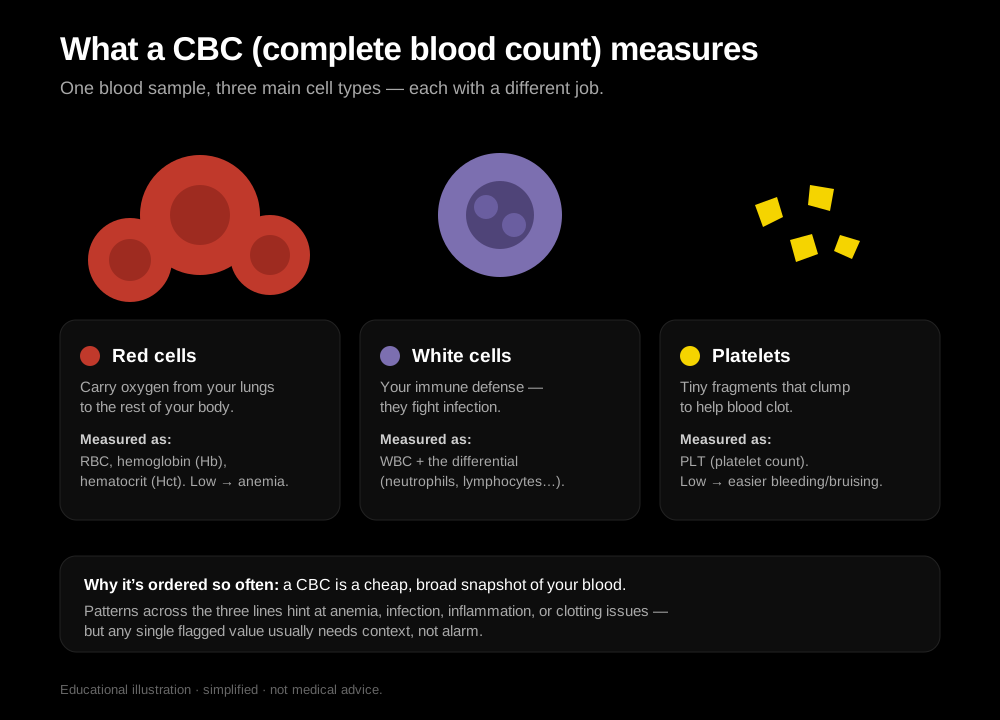
What three things does a CBC actually measure?
Three cell lines from a single blood sample: red cells (which carry oxygen — hemoglobin, hematocrit, RBC and the size indices MCV, MCH, MCHC, RDW), white cells (which fight infection — the total WBC plus the differential of neutrophils, lymphocytes, monocytes, eosinophils and basophils), and platelets (which help blood clot — count and MPV). A pattern across the three is far more meaningful than any single number.
Should I worry if one CBC value is flagged?
Usually not on its own. Reference ranges are set so that a small share of perfectly healthy people fall just outside them, and counts shift with hydration, recent illness, exercise, and lab-to-lab differences. A single, mildly out-of-range value with no symptoms is common. What matters more is how far outside the range it sits, whether several related values move together, and whether it persists on a repeat test. Review any flagged result with a clinician.
What does the white blood cell differential tell you?
The differential breaks your total white count into its types. High neutrophils often accompany bacterial infection, inflammation, or physical stress; high lymphocytes are more typical of viral infections; raised eosinophils can suggest allergies or parasites; monocytes and basophils shift for their own reasons. These are broad associations a clinician reads in context — not diagnoses.
What can a high or low platelet count suggest?
A high platelet count (thrombocytosis) is often 'reactive' — a response to infection, inflammation, iron deficiency, or recovery after bleeding — and less commonly reflects a bone-marrow condition. A low count (thrombocytopenia) can follow certain infections, some medications, or other conditions, and only tends to raise bleeding risk when it is quite low. Both are read alongside the rest of the panel by a clinician.
How often should I check a CBC?
There is no universal answer — it depends on your health, symptoms, and what a clinician is monitoring. Many people only have one when there is a reason. What adds the most value is comparing against your own earlier results: a stable value that has always sat slightly outside the range reads very differently from one that is newly drifting. Follow your clinician's guidance on timing.
Quanome is live — free on iPhone and Android
Make sense of your DNA and health data privately. Download Quanome free on the App Store or Google Play.
Quanome is free on the App Store and Google Play. Want product news too? Leave your email below.